

The analysis of power quality mainly focuses on four aspects.
Release time:
2021-11-12
To achieve a true analysis of power quality, correct analysis comes from four main aspects: 1. Continuous recording The advantages of continuous recording for improving practicality and solving erroneous trigger value settings are obvious. Many case studies illustrate that correct analysis cannot be conducted without the aid of continuous recording.
To achieve true power quality analysis, correct analysis comes from four main aspects:
1. Continuous recording
The advantages of continuous recording for improving practicality and solving erroneous trigger value settings are obvious. Many case studies illustrate that correct analysis cannot be conducted without continuous recording.
2. Record all parameters
Generally, most standard recorders and analyzers measure 3 line-to-line voltages and 3 current measurement waveforms, as well as some optional parameters.
Power quality monitoring devices record all parameters, including ground voltage frequency, harmonics, flicker, etc. Many site analysis processes illustrate the importance of recording all parameters to prevent issues.
3. High sampling rate and recording rate
The importance of high sampling frequency is very clear, showing the difference between the same event with 64 sampling points and 1024 sampling points. A graph with 64 sampling points per cycle can be considered as a voltage sag event, while a graph with 1024 sampling points per cycle clearly shows that the sag is actually caused by a surge.
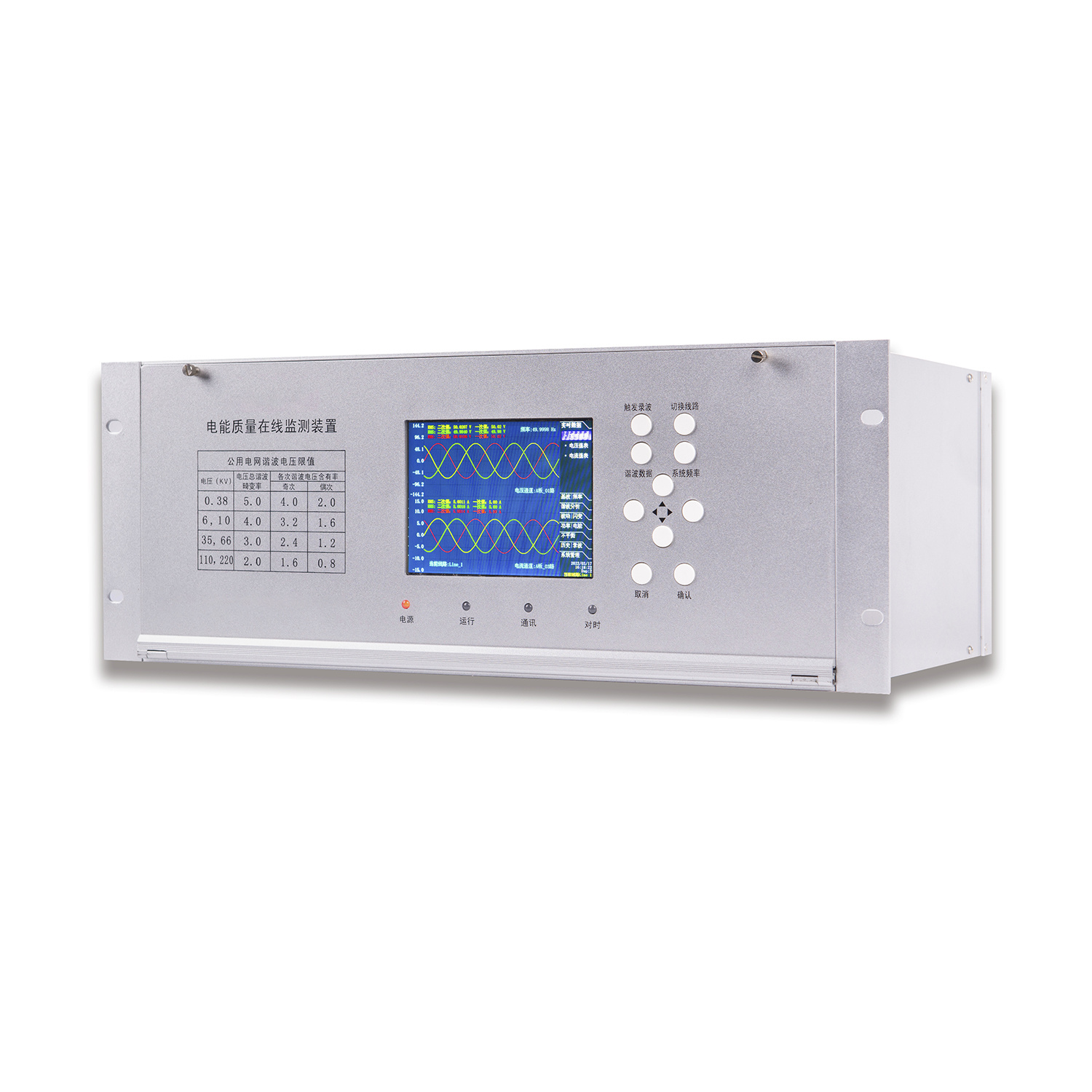
All analog channels of the power quality online monitoring device use 16AD synchronous sampling, with 1024 sampling points per cycle, i.e., a sampling rate of 51.2K.
4. Multi-point synchronous recording
Analysis of an event usually requires multi-point measurements. Correct analysis requires that: the online monitoring device accurately performs time synchronization, with synchronization accuracy reaching one sampling point, and all data can be recorded when the event occurs.
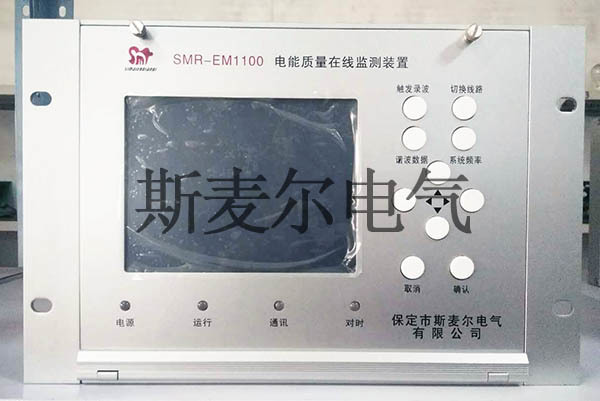
The power quality online monitoring device can accurately analyze each event, thereby precisely identifying the cause of the incident. It can provide users with customized power quality monitoring solutions to adapt to various application scenarios.
Keyword:
Recent information
The main factors of insufficient selection principle for small current grounding.


Mobile/WeChat


